
SFO vs Oakland vs San Jose Airport: Which Airport Is Best for Tri-Valley Travellers?
Compare SFO, Oakland, and San Jose airports for Tri-Valley travel, including drive time, convenience, flight options, and the best choice for your trip.
Introduction: Choosing the Right Bay Area Airport from the Tri-Valley
For people in Pleasanton, Dublin, Livermore, San Ramon, Danville, and nearby communities, choosing an airport is rarely as simple as selecting the one that looks closest on a map. The practical answer to the question “SFO vs Oakland vs San Jose airport” depends on the airline, departure time, traffic, luggage, parking plans, and whether you are traveling domestically or internationally.
San Francisco International Airport, Oakland International Airport, and Norman Y. Mineta San Jose International Airport each serve a different part of the Bay Area travel picture. SFO generally provides the broadest range of domestic and international flights. Oakland is often the most convenient East Bay option for Tri-Valley residents. San Jose may be attractive for travelers starting farther south or for a particular route and schedule.
This Bay Area airport travel guide is designed to make the choice easier without pretending there is one universal winner. A useful starting point is to consider Dublin City Cab when you need a direct discussion of airport transport help from the Tri-Valley, especially when comparing an early flight with a longer drive or a complicated transit connection.
The goal is not simply to compare airport size. It is to identify the airport that creates the least stressful overall journey from your specific home, hotel, or workplace to the gate.
How to Judge the Best Airport for Your Trip
Distance is only one part of the decision
Map distance is useful, but it does not measure the whole trip. A shorter drive can still take longer if it uses a congested corridor at the wrong time. Conversely, a farther airport may be worthwhile if it offers a nonstop flight, a better departure time, or easier terminal access.
Start by writing down four details: your exact starting point, the airline and flight time, the amount of luggage, and how you plan to reach the airport. Someone leaving Bishop Ranch before sunrise has a different set of priorities from a family leaving Livermore during an afternoon commute. A traveler staying near downtown Oakland also faces a different decision from someone coming from southern San Ramon.
It is also important to compare the complete door-to-door journey. Include the time needed to reach the terminal, park or unload, check bags, pass security, and walk to the gate. Airport convenience is a combination of road access and what happens after you arrive.
Traffic, terminal access, and flight availability matter too
Traffic patterns can change the ranking between the airports from one departure to another. Bay Area bridges, freeway interchanges, construction, collisions, and commute periods can all affect drive time. Check current Bay Area driving conditions before committing to a route, particularly for a time-sensitive departure.
Flight availability is the second major factor. SFO may be the only realistic choice for some international itineraries or complex connections. Oakland may provide a convenient schedule for a domestic trip, while San Jose could eliminate a cross-Bay drive for a traveler near the southern edge of the Tri-Valley. Compare the actual flights rather than judging airports in the abstract.
Finally, consider terminal access. An airport that is easy to reach by car may be less convenient if parking is full, drop-off lanes are crowded, or your terminal requires a long internal transfer. The best airport for Tri-Valley travellers is the one that performs well across the entire journey.
SFO: Best for the Widest Flight Network
When SFO makes the most sense
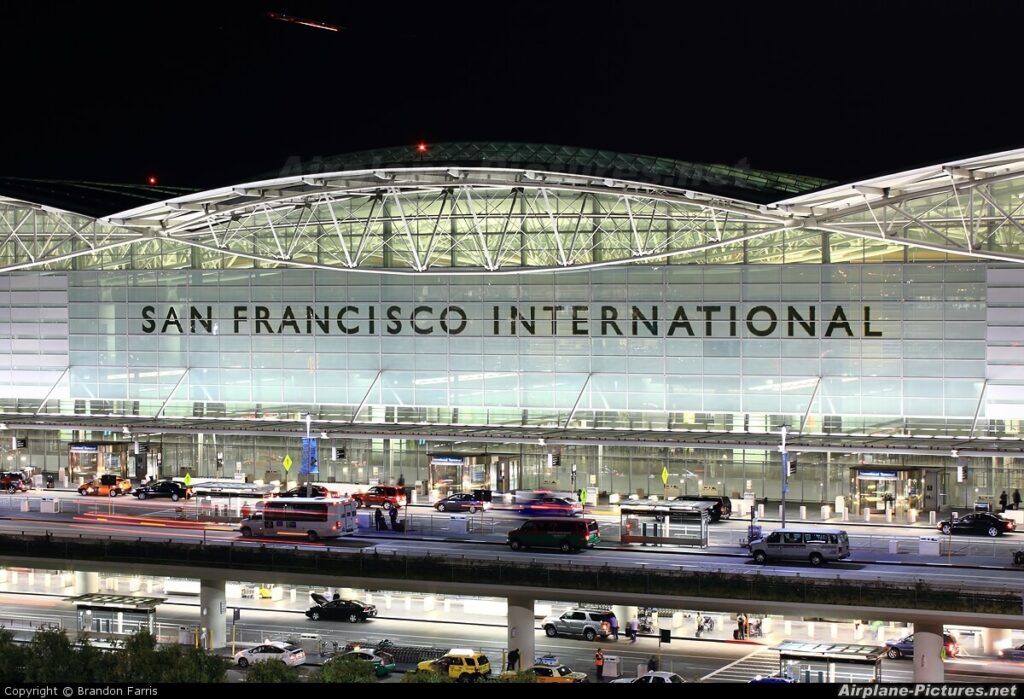
SFO is usually the strongest option when flight availability is the deciding factor. It commonly offers the broadest network among the three airports, including a substantial selection of domestic flights and international services. If the airline, destination, or departure time is difficult to find elsewhere, SFO may justify the additional drive.
SFO can also make sense when a nonstop service avoids a connection. A longer ground trip from the Tri-Valley may be a reasonable trade for a simpler itinerary, particularly when traveling internationally, carrying business equipment, or coordinating a trip for several people.
For some travelers, airline loyalty, frequent-flyer benefits, or a preferred terminal also influence the decision. These personal factors can outweigh a modest difference in drive time. Still, check the complete schedule and terminal details before assuming that SFO is automatically the best airport.
Trade-offs to keep in mind
The principal disadvantage is the journey from the Tri-Valley across the East Bay and toward the Peninsula. The route can be manageable at one time of day and unpredictable at another. Bridge and freeway conditions may make an apparently reasonable departure feel risky if there is little schedule flexibility.
SFO is also a large airport environment. More flight choices can mean more airline and terminal complexity, longer walking distances, or additional time for parking and drop-off. Travelers who are unfamiliar with the airport should allow enough time to find the correct terminal and complete check-in.
For an SFO trip, pre-booked local airport rides can make the ground portion more predictable than arranging transportation at the last minute. That does not remove traffic risk, but it can simplify pickup timing, luggage handling, and the decision about where to be dropped off.


Oakland Airport: Often the Sweet Spot for East Bay Convenience
Why Oakland can be the easiest choice for many Tri-Valley travellers
Oakland International Airport is frequently the practical middle ground in a Tri-Valley airport comparison. It is positioned on the East Bay side of the region, making it an appealing option for many trips from Dublin, Pleasanton, Livermore, San Ramon, and Danville. The exact advantage varies by neighborhood and traffic, but the route often avoids the longer cross-region journey required for SFO.
Oakland can be especially attractive for domestic travel when the schedule and fare are competitive. A simpler drive, less complicated terminal approach, and shorter overall airport experience may be more valuable than access to a larger flight network. Travelers should still verify the current airline schedule because route availability changes and not every destination is served from every airport.
For people traveling with children, bulky luggage, or mobility concerns, Oakland’s relative convenience may also reduce the number of transitions between vehicle, terminal, security, and gate. That is not a guarantee of shorter lines or easier conditions on every day; it is a reason to examine Oakland closely rather than treating it as a secondary option.
When Oakland Airport transportation is the smartest option
Oakland is often the airport to evaluate first when your origin is on the eastern side of the Tri-Valley and your flight is domestic. A direct taxi service or pre-arranged ride can take you from your door to the terminal without requiring a transfer, a bridge crossing by public transit, or a search for airport parking.
Review the practical Oakland Airport transportation options before your travel day. Compare pickup time, vehicle capacity, luggage needs, and the return journey as well as the outbound trip. Airport transportation is not only about reaching the airport; it also includes knowing how you will get home after a delayed or late-night arrival.
Oakland may not be the best answer when it requires a connection that SFO avoids or when its schedule forces an inconvenient overnight stay. The strongest choice is the airport that gives you a reliable itinerary at a reasonable total effort.
San Jose Airport: A Strong Option for South Bay and Some Business Trips
When San Jose is worth choosing
Norman Y. Mineta San Jose International Airport can be a smart choice for travelers who live toward the southern end of the Tri-Valley or who have business in the South Bay. For a traveler based in southern San Ramon, Danville, or a nearby business area, the route to San Jose may compare favorably with driving north toward Oakland or west toward SFO, depending on the time of day.
San Jose is also worth checking when its flight schedule lines up well with your plans. A suitable nonstop domestic flight, a preferred airline, or a departure that avoids the worst traffic window can make it the most efficient option. Business travelers should compare the airport with the location of meetings, hotels, and return appointments rather than focusing only on the outbound flight.
Like the other airports, San Jose has trade-offs. It may not provide the same breadth of international or long-haul choices as SFO, and a route that looks convenient from one Tri-Valley community may be less practical from another. Check the drive time at your actual departure hour and confirm terminal arrangements before booking.
Regional geography can be counterintuitive. The broader East Bay and inner Bay Area include communities such as the City of Lafayette, where route choices can shift based on bridges, freeway access, and the final destination. That is a reminder that airport selection should be based on the whole trip, not a simple north-versus-south assumption.
Comparing Drive Time, Traffic, and Real-World Convenience
Why the shortest map distance is not always the quickest trip
The most reliable way to compare SFO airport vs Oakland airport vs San Jose airport is to evaluate a realistic departure scenario. Check navigation at the same planned departure time, then add a buffer for incidents and airport arrival needs. A route that is shorter in miles may expose you to a bridge, a busy interchange, or a congested corridor that makes arrival less predictable.
Consider the following questions:
- Will the trip occur during a weekday commute, a weekend travel period, or a holiday?
- Does the route depend on a bridge or a single major freeway?
- Are you checking bags or traveling with only a carry-on?
- Will someone drop you at the terminal, or will you need to park?
- How much flexibility do you have if traffic adds significant time?
Departure time deserves special attention. A very early flight may make a pre-booked car or taxi more attractive because transit options can be limited. A midday flight may allow more choices, but it can also overlap with heavier traffic depending on the route. For the return trip, consider arrival time, fatigue, and whether a rideshare pickup or public transit connection will be convenient.
Travelers coming from Bishop Ranch may prioritize a predictable pickup for a business departure, while someone in Diablo may focus more on the route’s road conditions and available return transportation. The airport decision changes with the starting point.
Which Airport Is Best by Trip Type?
Best for international travel
SFO is generally the first airport to check for international travel because it typically offers the widest international network and more itinerary choices. It may be worth the longer drive when it provides a nonstop flight or avoids an inconvenient connection. Confirm the airline, terminal, check-in requirements, and any connection details before making the final choice.
Best for domestic trips
Oakland often deserves the first look for domestic trips from the East Bay side of the Tri-Valley, provided the schedule works. San Jose can be equally sensible for southern Tri-Valley travelers or trips connected to South Bay business. SFO remains a strong option when it offers a better departure time, fare, or nonstop route.
Best for families and luggage-heavy trips
Choose the airport with the simplest door-to-terminal journey rather than automatically choosing the closest facility. A direct ride, manageable parking plan, and fewer transfers can be more valuable than a small difference in flight price. Oakland may be convenient for many families from the Tri-Valley, while SFO may still win if it eliminates a connection.
Best for business travelers
Business travelers should compare the airport with the location of the meeting. San Jose can be practical for South Bay appointments, Oakland can work well for East Bay destinations, and SFO may offer the best flight schedule for regional or international business travel. Include the return journey and the cost of time spent in traffic.
Best for budget-conscious travelers
Compare the total price, not just the airfare. Include parking, taxi or rideshare costs, tolls, baggage-related decisions, and the value of your time. A cheaper ticket from a distant airport may not remain cheaper after transportation costs are added. Conversely, a modestly higher fare from a more convenient airport may reduce stress and simplify the day.

Ground Transportation Options from the Tri-Valley
Taxi, rideshare, and pre-booked airport transport
A taxi service or pre-booked airport ride is often the simplest option when you have an early departure, several bags, children, or a fixed arrival time. It provides one continuous trip from a home, hotel, or office to the correct terminal. Confirm the pickup address, flight time, number of travelers, and luggage requirements in advance.
Rideshare services can be useful for flexible travelers, but availability, pickup instructions, pricing, and vehicle size can vary. Airport pickup zones may require walking from the terminal or following specific signs. A traditional taxi can be preferable when you want a clearly arranged pickup or need help planning a trip from a less central Tri-Valley location.
Residents can review service areas across the region when deciding whether a local provider covers their community. Travelers in Alamo and surrounding areas should also compare the planned route and pickup window rather than relying only on an estimated map time.
Public transit considerations
Public transit can reduce the need to drive and park, but it requires more planning from the Tri-Valley. Depending on your origin, you may need to combine local transportation with BART, an airport connector, or another transfer. Check BART schedules for the planned travel date and pay attention to early-morning, late-night, weekend, and service-change information.
The Capitol Corridor may be useful for certain regional journeys, but it is not a universal airport solution. Review Capitol Corridor routes alongside the final connection to the airport. A rail trip can be comfortable when the schedules align, yet a transfer with luggage may make a direct vehicle more practical.
Public transit is most attractive when you have flexible timing, limited luggage, and a convenient connection from your starting point. It is less appealing when a missed connection could jeopardize an international departure.
Parking and pickup realities
Driving yourself gives you control, but parking adds cost, walking time, and another decision on arrival. Check the airport’s current parking information rather than assuming availability. For a short trip, parking may be convenient; for a longer trip, compare the total cost with a taxi, rideshare, or airport shuttle.
Drop-off is usually simpler than parking, but the person driving still needs to allow for traffic and terminal congestion. For a return pickup, confirm the airport’s current instructions and agree on a meeting plan. Travelers should avoid assuming that curbside pickup will be immediate, particularly during busy arrival periods.
If you want help comparing a direct ride with other airport transportation from Tri-Valley communities, Dublin City Cab can be one local starting point. The right arrangement depends on the airport, flight time, party size, and luggage.
Frequently Asked Questions
Which airport is best for Tri-Valley travellers overall?
There is no single answer for every traveler. Oakland is often the most convenient East Bay choice, SFO usually has the broadest flight network, and San Jose can be strong for southern Tri-Valley origins or selected routes. Compare the actual flight and door-to-terminal journey.
Is Oakland closer to Dublin and Pleasanton than SFO?
Oakland is often a convenient option for these communities because of its East Bay location, but actual drive time depends on the starting address, traffic, and departure hour. Check live road conditions and compare the complete route rather than relying on general distance.
Should I always choose SFO for an international flight?
SFO is usually the first airport to check for international availability, but not every international itinerary requires it. Compare nonstop options, connections, departure times, airfare, and transportation costs before deciding.
When is San Jose Airport the better choice?
San Jose may be preferable when you are traveling from the southern Tri-Valley, have business in the South Bay, or find a suitable route that avoids a difficult cross-Bay drive. The best choice still depends on the specific schedule and traffic conditions.
Is public transit practical from the Tri-Valley to these airports?
It can be practical for some travelers, particularly those with flexible schedules and light luggage. However, connections and operating hours require careful checking. For early flights, large groups, or international departures, direct airport transportation may be simpler.
How early should I arrange airport transportation?
Arrange it as soon as your flight is confirmed, especially for early departures, holidays, large parties, or trips requiring extra luggage space. Confirm the pickup location and timing again before travel day.
Final Recommendation: Choose the Airport That Matches the Trip
The best airport for Tri-Valley travellers is not determined by airport size or a single map estimate. SFO is usually the strongest choice for flight availability and international options. Oakland is often the sweet spot for East Bay convenience and many domestic trips. San Jose deserves serious consideration for southern Tri-Valley travelers, South Bay business, and schedules that make the southern route more efficient.
Before booking, compare five things: the actual flight, realistic drive time, traffic patterns, terminal access, and the complete transportation cost. Then consider luggage, parking, public transit, and the return trip. This approach turns an overwhelming airport choice into a practical decision.
For a low-pressure review of pickup options or questions about getting to the airport from the Tri-Valley, contact the team with your travel details. A clear plan can make the airport you choose feel much more convenient.